
Knowledge and training platform from Zoho.
Made in IndiaFree plan
Starts at
Free plan
Free, independent software advice for Indian businesses
For software companies: reach Indian businesses ready to buy
HR & Payroll · LMS software
Content teams building out a large training library often hit the same wall: modules get duplicated across courses, updates don't propagate, and nobody is sure which version of a file is current.
App Advisor doesn't have a dedicated LCMS Software category yet, so these are related lms software listings that cover part of the job. Confirm the specific capability in a demo, or ask the advisor for a shortlist.
Knowledge and training platform from Zoho.
Starts at
Free plan

Learning management within Keka.
Starts at
₹6,999/mo

Open-source LMS used by universities worldwide.
Starts at
Free

Open-source (MIT) configurable building blocks for learning and human development platforms at scale. | lms-software
Starts at
Free

Easy cloud LMS for SMBs.
Starts at
Free plan

Open-source LMS.
Starts at
Free

LMS for schools and universities.
Starts at
Free plan

Free classroom management for schools.
Starts at
Free

Open-source MOOC platform.
Starts at
Free

Classroom collaboration in Teams.
Starts at
Free

Certification training built in Bengaluru.
Starts at
₹3,000/mo

Platform for creators to host workshops, courses and communities with payments; Basic plan has no fixed fee. | lms-software
Starts at
₹5,000/mo

LMS with many integrations built in Pune.
Starts at
On request

Corporate LMS from Pune.
Starts at
On request
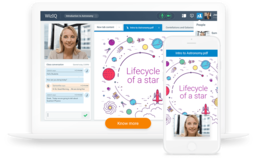
Virtual classroom and LMS built in India.
Starts at
₹2,000/mo

Enterprise LMS built in Chennai.
Starts at
On request

Sell online courses.
Starts at
Free plan

LMS with authoring tools.
Starts at
₹300/mo

Course creation and sales.
Starts at
Free plan

Executive education online.
Starts at
Pay as you go

School and coaching platform built in Bengaluru.
Starts at
Free plan

Community and course platform.
Starts at
Free plan

Gamified quizzes for classrooms built in Bengaluru.
Starts at
Free plan

Skilling and learning platform for enterprises built in Mumbai.
Starts at
On request
See all 180 lms software products
LCMS software exists specifically to fix that, giving a training or L&D team one authoring system with version control and reuse built in, so content stays consistent no matter how many courses it ends up feeding.
It is the software category dedicated to authoring, organising and versioning training content, separately from whatever system actually delivers courses to learners. A content creator builds a module once inside the LCMS, tags it for search and reuse, and that same module can be pulled into multiple different courses, with any future edit updating everywhere it is used rather than needing separate fixes in each course.
Check how well the LCMS integrates or exports to your existing LMS, since content that cannot flow cleanly into delivery defeats the purpose. If content needs translation across regional languages, confirm localisation is handled as linked, trackable versions rather than entirely separate files that drift apart over time. Ask about total content volume limits and storage costs at scale, since video-heavy training libraries can grow large quickly.
Ask the vendor to demonstrate a content update propagating across two courses that reuse the same module, since that is the core value proposition to verify. Check the approval and review workflow in practice, not just in theory, since a library with many contributors needs real guardrails. Ask about migration effort if importing content from an existing system, and confirm export format compatibility with the LMS platforms you might use now or later.
BudgetEntry pricing starts at ₹300/month in this list.
India fit44 of 161 are built in India, with GST and rupee billing handled natively.
Try before you buy30 products have a free plan you can run a real month on.
Get an instant demo
No, an LMS delivers and tracks courses for learners, while an LCMS is focused on authoring and managing the underlying content that eventually gets delivered through an LMS.
Not always. It becomes valuable once a team is managing enough content that duplication and version confusion are causing real problems, which is more common in larger or fast-growing training libraries.
Most rely on standard formats like SCORM or xAPI for portability, which work with the majority of LMS platforms, but always confirm compatibility with your specific LMS before committing.
Every content edit is tracked as a new version, so teams can see what changed, who changed it, and roll back to a previous version if an update causes issues in live courses.
Yes, most systems are built for collaborative authoring with role-based permissions and approval steps, so multiple contributors can work on a shared content library without overwriting each other's work.
Need help choosing?
Tell us about your business and we send a shortlist with honest pros and cons, then arrange demos. Free — the vendor invoices you directly.