

Digital operations for SME manufacturers.
RecommendedTrendingMade in India
Starts at
Free plan
Free, independent software advice for Indian businesses
For software companies: reach Indian businesses ready to buy
Operations & Supply Chain · Manufacturing & production software
A standard MES tells you what happened on the shop floor after the fact. AI-enhanced MES tries to flag problems before they fully happen — a machine trending toward failure, a batch drifting toward a quality miss — by learning patterns from your own historical production data.
App Advisor doesn't have a dedicated AI MES Software category yet, so these are related manufacturing & production software listings that cover part of the job. Confirm the specific capability in a demo, or ask the advisor for a shortlist.
Digital operations for SME manufacturers.
Starts at
Free plan

Manufacturing module in ERPNext.
Starts at
Free plan

Industrial IoT and smart factory built in Bengaluru.
Starts at
Free plan

Custom shop-floor apps.
Starts at
₹600/mo

MRP and shop floor in Odoo.
Starts at
Free plan

Maintenance management software.
Starts at
Free plan
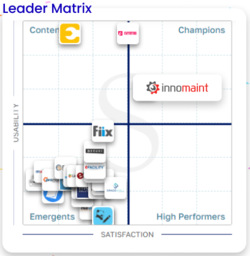
CMMS and facility management built in Chennai.
Starts at
₹1,500/mo
Mobile CMMS.
Starts at
Free plan

IT and asset management built in Bengaluru.
Starts at
₹2,000/mo

CMMS for manufacturing and facilities.
Starts at
₹1,500/mo

Cloud MRP for small manufacturers.
Starts at
₹4,000/mo

Maintenance management.
Starts at
Free plan

ISO compliance QMS built in Mumbai.
Starts at
₹500/mo

Work orders and maintenance.
Starts at
Free plan

CMMS from Fluke.
Starts at
₹5,000/mo

Inspections and checklists app.
Starts at
Free plan

Production planning for small makers.
Starts at
₹15,000/mo

AI for manufacturing process optimisation.
Starts at
On request

Cloud QMS.
Starts at
₹1,000/mo

No-code apps for operations.
Starts at
On request

Inspection and audit app.
Starts at
Free plan

Manufacturing ERP and MES.
Starts at
On request

MES and manufacturing operations.
Starts at
On request

Industrial software suite.
Starts at
On request
See all 109 manufacturing & production software products
Done well, this catches issues a human reviewing dashboards would miss until it's too late, cutting scrap and unplanned downtime. Done poorly, it's a marketing label on the same reports you already had. The features to check in a demo matter more than the word "AI" on the brochure. Consider a bearings manufacturer where a slow rise in scrap on one grinding machine, invisible to a supervisor glancing at a shift report, actually correlated with ambient temperature swings the AI model had learned from six months of history. Catching that pattern early, rather than after a costly batch of rejects, is the specific value an AI layer over a standard MES is meant to add.
Traditional MES logs and reports what already occurred: output, downtime, rejections. AI features analyse that historical data to spot patterns — for example flagging that a machine's vibration or temperature trend usually precedes a breakdown, or that a certain material batch tends to produce more rejects. It's pattern-matching on your own data, not a magic prediction; it needs enough historical data from your plant to be useful, and it improves as more data accumulates.
Ask the vendor for the actual accuracy or false-positive rate of their predictive alerts on a comparable factory, not a lab demo — a system that cries wolf constantly gets ignored. Confirm how much of your own historical data is needed before it starts giving useful predictions; some tools need six months to a year of clean data first. Also check whether the "AI" features are core to the product or a bolt-on add-on priced separately, and ask what happens (does the base MES still work fully) if you decide not to use the predictive module.
Ask for a live demo using anonymised or sample data close to your own product mix, not a polished generic dataset. Ask exactly what data inputs (sensors, quality logs, maintenance records) feed the AI model, since missing inputs quietly limit accuracy. Get a reference from an existing customer who has used the predictive features for at least six months and ask them directly how many false alarms they saw and how much downtime or scrap it actually prevented. Be wary of a vendor who can't explain, in plain terms, why a specific alert fired — if the reasoning is a black box even to their own support team, it will be far harder for your operators to trust and act on it consistently.
BudgetEntry pricing starts at ₹500/month in this list.
India fit22 of 109 are built in India, with GST and rupee billing handled natively.
Try before you buy10 products have a free plan you can run a real month on.
Get an instant demo
It generally needs sensors on key machines (vibration, temperature, current draw etc.) to feed the prediction models; how much retrofitting is needed depends on your existing equipment and should be quoted upfront.
Accuracy varies a lot by use case and how much clean historical data is available. Ask vendors for real accuracy figures from comparable customers rather than accepting general claims.
Yes, but the value depends on having enough historical production data to train on; a very new or very small operation may get more value starting with a standard MES and adding AI later.
No, it helps a maintenance team act earlier by flagging likely issues; the actual maintenance work and judgement still rests with your team.
Good systems let operators mark predictions as false alarms, which should improve the model over time. Ask how each vendor handles and reports on this feedback loop.
Need help choosing?
Tell us about your business and we send a shortlist with honest pros and cons, then arrange demos. Free — the vendor invoices you directly.