
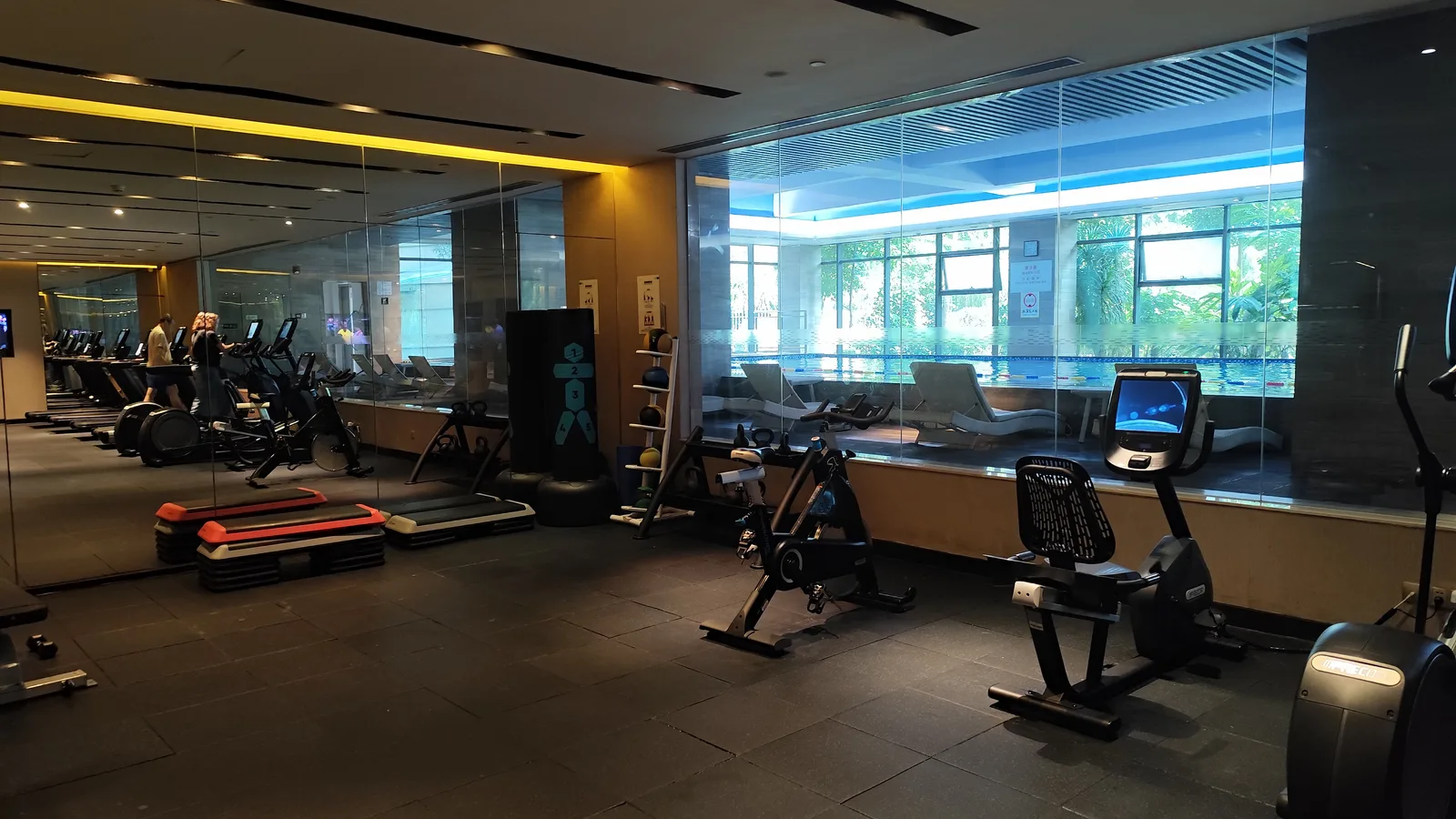






Gym and fitness studio management software runs memberships, renewals, payments, attendance and access control, class and trainer bookings, personal-training packages, and member communication from one system, usually with a member app. For an Indian single-location gym, the deciding features are automated renewal reminders with UPI payment links, reliable check-in (QR, RFID or biometric), and trainer commission tracking. Multi-location chains and boutique studios should also weigh class booking, waitlists and franchise reporting. International products such as GymMaster publish prices in foreign currencies, while India-focused vendors such as FitnessForce generally quote. Biometric check-in brings data protection duties, so decide on access technology deliberately.
Executive summary
- Renewals are the revenue engine. Membership churn, not new sign-ups, decides most gyms' cash flow. Choose software that automates expiry reminders, payment links and win-back offers.
- Access control is a design choice with compliance implications. Fingerprint or face check-in reduces buddy-punching, but biometric data is personal data under the DPDP Act, 2023. QR or RFID can be simpler.
- Published pricing is mostly foreign-currency. GymMaster lists software-only plans from USD $89/month (up to 100 members). FitnessForce, Virtuagym and Perfect Gym did not show a rate card on the pages we could access.
- Boutique studios and big-box gyms need different tools. Class scheduling, waitlists and pack-based credits matter for yoga, CrossFit and dance studios. Access control and PT packages matter for equipment gyms.
- Trainer commissions are a hidden requirement. If PT sales are material, commission calculation must be native or your payroll will stay in spreadsheets.
App Advisor is not affiliated with any vendor named here.
Market context
India's fitness market has no single official statistical series for gyms and studios, so we do not cite a market size. Qualitatively, three segments buy software differently:
- Independent neighbourhood gyms that sell monthly, quarterly and annual memberships, often collected in cash or UPI, with renewal tracking on paper or in WhatsApp.
- Boutique studios (yoga, Pilates, CrossFit, dance, martial arts) that sell class packs and depend on scheduling, waitlists and instructor utilisation.
- Multi-location chains and franchises that need central pricing, cross-location access, and consolidated reporting by branch and franchisee.
Public policy supports participation in fitness through the government's Fit India Movement (fitindia.gov.in), but software requirements are driven mainly by commercial and legal factors:
- Payments: members expect UPI links and autopay for renewals. Your gateway agreement, not the gym software, sets transaction charges.
- Personal data: member records often include health information, photographs and, increasingly, biometric templates for door access. The Digital Personal Data Protection Act, 2023 sets duties on data fiduciaries, including notice, consent, purpose limitation and security safeguards.
- Consumer protection: long-term memberships sold upfront can lead to refund and freeze disputes. Clear, system-enforced terms reduce conflict.
Vendor positioning shows where the category is heading. FitnessForce describes membership management with automated reminders, member apps and commission tracking on its homepage (fitnessforce.com). GymMaster states that all plans include billing automation, member apps, online bookings, POS and marketing tools, with a 60-day money-back guarantee and no lock-in contracts (GymMaster pricing).
Evaluation framework
App Advisor methodology: weighted for a single- or dual-location Indian gym with 300–1,500 members that sells memberships plus personal training. Studios should raise the weight of class scheduling.
| Criterion | Weight | What good looks like |
|---|---|---|
| Membership and renewal automation | 20% | Plan templates, freeze and transfer rules, expiry reminders, UPI payment links, autopay |
| Check-in and access control | 15% | QR, RFID, biometric or face options; turnstile or door integration; offline fallback |
| Class and trainer scheduling | 15% | Class booking, waitlists, capacity caps, trainer calendars, PT session tracking |
| Sales CRM and lead follow-up | 10% | Walk-in and online leads, trial passes, follow-up tasks, conversion reports |
| Billing, GST and POS | 10% | GST invoices, supplements and merchandise POS, payment reconciliation |
| Staff and commissions | 10% | Trainer commission rules, staff attendance, payroll export |
| Member app and engagement | 10% | Branded or white-label app, workout plans, notifications, referrals |
| Data protection and pricing transparency | 10% | Biometric consent, role-based access, data export; clear price and contract terms |
Vendor comparison
| Product | Positioning | Published price (as shown) | Access control | Source |
|---|---|---|---|---|
| GymMaster | Gym software with optional 24/7 door access | Software only: Foundation $89/mo (up to 100 members), Advanced $129/mo (up to 400), Professional $209/mo (up to 1,300), Enterprise quote. With 24/7 door access: $129, $169, $249/mo respectively. Prices in USD (AUD and NZD also listed); 10% discount for annual payment | Yes, as bundle | gymmaster.com/pricing |
| FitnessForce | Fitness club and studio management used by Indian operators | Not published on the page we could access (Quote) | Integrations available (confirm devices) | fitnessforce.com |
| Virtuagym | Club management plus coaching app | Not published on the page we could access | Confirm with vendor | virtuagym.com |
| Perfect Gym | Enterprise club management | Quote | Yes (enterprise) | perfectgym.com |
| Gym Insight | Gym management software | Not published on the page we could access | Confirm with vendor | Vendor site |
| GymOwl | Gym management app | Not published on the page we could access | Confirm with vendor | Vendor site |
Interpretation:
- GymMaster is unusually transparent. Its member-count tiers help you forecast cost as you grow. The prices are not in INR, and we have not converted them. Check payment-gateway support for Indian UPI and cards before choosing.
- FitnessForce is widely associated with Indian fitness operators and emphasises renewals, reminders and commission tracking. Request a quote that separates the member app, access integration and SMS/WhatsApp costs.
- Enterprise platforms such as Perfect Gym target chains and franchises with complex access and billing.
Explore the salon and fitness software category for more options, and consumer-side health and fitness apps such as Cult.fit and Fittr that shape member expectations. If you also run a spa or salon, see our guide to salon and spa CRM and billing software.
Total cost of ownership
Illustrative model — assumptions stated.
Gym profile: one location, 600 active members, average membership value ₹12,000/year, 8 trainers, PT revenue 20% of membership revenue.
| Cost or value line | Assumption | Annual effect |
|---|---|---|
| Software subscription | Quote S per year (for GymMaster's Advanced tier, the published $129/month applies up to 400 members, so 600 members would need the Professional tier; convert at your bank's rate) | S |
| Access hardware | QR/RFID reader or biometric terminal plus turnstile, one-time H, amortised over 4 years | H ÷ 4 |
| Payment gateway | MDR r on online collections | Collections × r |
| Messaging | 600 members × 2 reminders/month × 12 × rate m | 14,400 × m |
| Revenue at stake from churn | Membership revenue ₹72,00,000 (600 × ₹12,000) | — |
| Value of 5-point renewal improvement | 5% of members retained × ₹12,000 | 30 × ₹12,000 = ₹3,60,000 |
| PT commission errors avoided | Assume 2% of PT revenue (₹14,40,000) mis-paid today | ₹28,800 |
The logic: if automated renewals keep 30 additional members a year, that ₹3.6 lakh typically dwarfs subscription and messaging costs. Run this model with your own churn data before deciding that a cheaper tool is better value.
Implementation roadmap
| Phase | Weeks | Activities | Output |
|---|---|---|---|
| 1. Policy and plans | 1 | Define plans, freeze and transfer rules, PT packages, commission rules, refund terms | Signed-off price book |
| 2. Configuration | 1–2 | Plans, staff roles, class schedule, GST invoice format, payment gateway | Configured system |
| 3. Member migration | 2–3 | Import members with start and expiry dates, balances, PT sessions remaining | Reconciled member list |
| 4. Access control | 2–4 | Install devices; enrol members (with consent if biometric); test offline behaviour | Working check-in |
| 5. App launch | 3–5 | Member app rollout at front desk; class booking live | Target activation reached |
| 6. Automation | 4–6 | Renewal reminders, birthday offers, inactive-member alerts | First automated renewals |
| 7. Review | 8 | Compare churn, collection and attendance with pre-software baseline | Go/no-go on add-ons |
Risks and compliance checklist
- Biometric data: give a clear notice, collect consent, offer a non-biometric alternative, secure templates, and define deletion when membership ends, in line with the DPDP Act, 2023.
- Health information: PAR-Q forms and injury notes should be access-restricted to trainers who need them.
- Refund, freeze and transfer terms: configure them in the system and print them on invoices and contracts.
- GST invoices: make sure invoices carry correct GSTIN and tax breakdown. Confirm treatment with your adviser.
- Autopay mandates: follow your payment provider's rules for recurring payments and member notifications.
- Offline access: test door access when internet or the vendor cloud is unavailable.
- Data export: make sure you can export members, payments and attendance if you change vendors.
- Marketing consent: WhatsApp and SMS campaigns need opt-in, and SMS needs DLT-registered templates.
KPIs to track
| KPI | Definition | Why it matters |
|---|---|---|
| Renewal rate | Members renewing within 30 days of expiry ÷ members expiring | Main driver of revenue |
| Monthly churn | Members lost ÷ opening active members | Early warning |
| Lead-to-member conversion | New members ÷ leads (walk-ins + online) | Sales effectiveness |
| Visit frequency | Average check-ins per active member per week | Low frequency predicts churn |
| Class utilisation | Booked spots ÷ capacity | Studio schedule efficiency |
| PT attach rate | Members with PT ÷ active members | Secondary revenue |
| Collections outstanding | Unpaid instalments ÷ billed | Cash-flow health |
| App activation | Members with app login ÷ active members | Engagement channel reach |
How to choose
- Equipment gym: prioritise renewals, access control and PT commissions.
- Boutique studio: prioritise class booking, waitlists, credit packs and instructor payouts.
- Chain or franchise: prioritise multi-location access, central pricing, franchise royalty reports and role-based permissions.
- Test payments end to end: create a membership, pay by UPI link, set autopay, and freeze the plan.
- Decide your access technology before signing: ask for a device list, offline behaviour and costs.
- Model cost in your currency: if pricing is in USD, AUD or another currency, include foreign exchange and card charges in your budget.
Staff attendance and payroll for trainers can also be handled by an HRMS. See our list of HRMS software in India and attendance software.
Vendor demo script
Gym software looks similar in brochures. The differences show up at the front desk at 7 a.m. and on renewal day. Run this script with every vendor, using your own plans and a few real member scenarios.
Scenario 1: Selling a membership. A walk-in prospect takes a free three-day trial, returns, and buys a quarterly membership with a joining fee, a 10% corporate discount and a personal-training package of 12 sessions. Check that:
- The lead is captured at the trial stage, with follow-up tasks for the sales team.
- The invoice shows GST correctly for the membership, PT package and any merchandise.
- Payment can be taken by UPI link sent to the member's phone.
- The PT package is linked to a trainer, for commission calculation.
Scenario 2: Check-in at peak time. Ask the vendor to show QR, RFID and biometric options, and to demonstrate what happens when a member with an expired plan tries to enter. Then disconnect the internet and repeat. The access device should either allow cached valid members or fail safely according to your policy.
Scenario 3: Freeze, transfer and upgrade. The member travels for three weeks and requests a freeze, later upgrades to an annual plan with the unused value credited, and finally transfers the remaining membership to a family member. Each step should follow your written rules without manual date calculation.
Scenario 4: Classes and waitlists (studios). Create a capacity-limited class, fill it, add three members to the waitlist, cancel one booking inside the cut-off window, and show how the late-cancellation rule and waitlist promotion work. Check instructor payout per class.
Scenario 5: Renewal automation. Show the renewal pipeline for members expiring in the next 30 days, the reminder schedule by WhatsApp or SMS, the payment link, and a win-back offer for members who lapsed last month.
Scenario 6: Month-end. Produce trainer commission, collections by payment mode, outstanding instalments, churn and attendance reports. Export them to your accountant's format.
Hardware questions
Access control is where many projects stall. Ask each vendor:
- Which specific turnstile, door-lock, RFID and biometric devices are supported?
- Who supplies and installs the hardware, and who services it?
- How are biometric templates stored, encrypted and deleted when a member leaves?
- Is there a non-biometric alternative for members who do not consent?
- What is the total hardware cost per entry point, and what is the warranty?
Contract terms to watch
- Minimum term and auto-renewal of the subscription.
- Per-member or per-location price bands and what happens when you cross them.
- Messaging charges, payment-gateway partnerships and whether you can use your own gateway.
- Ownership of the member app listing if it is white-labelled.
- Data export of members, payments, bookings and attendance on exit.
Selecting on these points protects renewals, the part of the business that software influences most.
Key terms
- Membership plan: a time-bound entitlement (monthly, quarterly, annual) with rules for access hours, freezes and transfers.
- Class pack or credits: a bundle of sessions a member can book within a validity period, common in yoga, Pilates and dance studios.
- PT package: a set number of personal-training sessions linked to a trainer, often the basis for commission.
- Freeze: a temporary pause that extends a membership's end date, usually limited by days per year.
- Access control: hardware and software that allow or deny entry, such as QR scanners, RFID cards, fingerprint or face readers, and turnstiles.
- Churn: members who do not renew within a defined window after expiry.
- Autopay mandate: a member's standing authorisation for recurring payments through UPI or cards, subject to the payment provider's rules.
- Waitlist promotion: automatic booking of the next waitlisted member when a class spot opens.
- White-label app: a member app published under the gym's own brand instead of the software vendor's brand.
- Data fiduciary: under the DPDP Act, 2023, the organisation that decides why and how personal data is processed. For member data, that is the gym, not the software vendor.
Understanding these terms helps you compare quotes on equal footing, because vendors often use different names for the same capability.
FAQs
What is gym management software?
It is software that manages gym memberships, renewals, payments, check-ins, class and trainer bookings, personal-training packages, staff and member communication, usually with a mobile app for members.
How much does gym management software cost?
It varies by vendor and member count. GymMaster publishes software-only plans from USD $89/month for up to 100 members, rising with member tiers. Many India-focused vendors, such as FitnessForce, share prices on request.
Is biometric attendance legal for gyms in India?
Gyms can use biometric check-in, but biometric data is personal data under the DPDP Act, 2023. Give notice, obtain consent, secure the data, delete it when no longer needed, and consider offering QR or RFID as an alternative. Take legal advice for your setup.
Can gym software send renewal reminders on WhatsApp?
Many platforms support WhatsApp or SMS reminders, sometimes through integrations. Messaging usually costs extra and requires member opt-in. SMS templates must be DLT-registered.
What is the best software for a yoga or Pilates studio?
Choose software with strong class scheduling, waitlists, capacity limits, class packs and instructor payouts. Membership-only gym tools can be weak on these.
Does gym software handle trainer commissions?
Some products include commission tracking for PT sales and sessions. FitnessForce, for example, mentions commission management on its site. Test your exact commission rules in a demo.
Can I manage multiple gym branches in one system?
Most mid-market and enterprise products support multiple locations with cross-branch access and consolidated reports. Confirm whether pricing is per location.
How long does it take to switch gym software?
A single location can usually migrate in four to eight weeks, including member data, access device setup and app rollout.