


Quick answer: Call tracking connects your phone calls to CRM records so every conversation is logged, recorded and reviewable. Scoring means listening to a sample against a checklist. MyOperator lists call recording, click-to-call, IVR and live monitoring with Zoho CRM and LeadSquared integrations, Ozonetel CloudAgent adds automated quality scoring and speech analytics, and Knowlarity is the third cloud telephony name to shortlist.
Why calls are the blind spot in Indian sales
Ask most owners how many calls their team made yesterday and the honest answer is a guess. Calls happen on personal mobiles, outcomes live in memory, and when a salesperson leaves, so does the relationship. Meanwhile, in India, the phone is still where the deal is usually closed: price negotiations, site visit scheduling, payment follow-ups and complaints.
Call tracking fixes three separate problems. It gives you activity data (who called whom, how long, answered or missed). It gives you evidence (the recording, for disputes and coaching). And it gives you context (the call appears on the customer's CRM record, so the next person knows what was said). Scoring is a fourth layer, optional at first.
What call tracking should capture
| Item | Why it matters |
|---|---|
| Caller and called number matched to a CRM record | No orphan calls with no customer attached |
| Direction, duration and answered/missed status | Basic activity and response-time reporting |
| Recording | Coaching, dispute resolution, compliance |
| Disposition (outcome tag) | Interested, call back, wrong number, not interested |
| Next follow-up set before the call ends | Prevents "I'll call later" from becoming never |
Features the vendors list on their own sites
MyOperator lists call recording ("securely store and access customer calls"), an IVR for menus, click-to-call to "connect with leads instantly with one click", a live call dashboard, and call barging and whispering, where a supervisor can monitor and guide agents during live conversations. It also lists WhatsApp Business API features and unified analytics across channels, and CRM connections with Zoho CRM, Freshdesk, LeadSquared and Shopify. Its pricing is on its own pricing page.
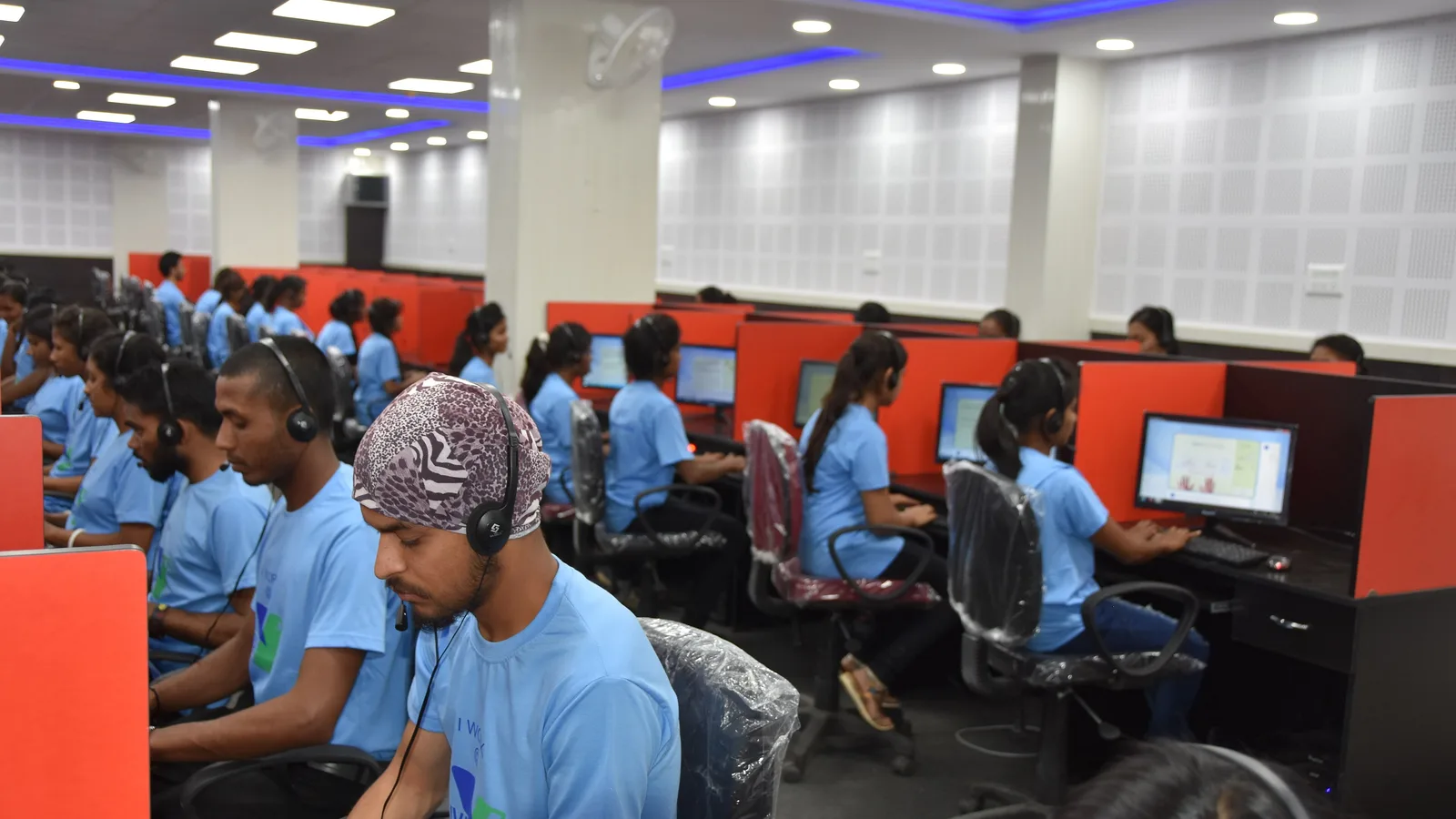
Ozonetel CloudAgent lists screen recording and automated quality assurance to "analyze all customer interactions in real-time with customizable parameters and evidence-based audit trails". It also lists predictive, power and preview dialers, speech analytics with sentiment tracking, call summarisation, and voice AI agents supporting 24 vernacular languages. CRM integrations listed include Zoho, Zendesk, Salesforce, Freshdesk, HubSpot and LeadSquared. Ozonetel does not display pricing on that page; you request a demo. It is built for contact-centre scale, so a five-person team may find it more than needed.
Knowlarity is a cloud telephony provider listed on App Advisor. Its lead-management page describes a product called Tentacle for telecallers, with contact lists, call reports, an analytics dashboard, CRM integration and a mobile app, and says a team can upload a contact list and start a calling campaign within 5 minutes. Its speech-analytics page lists speech-to-text transcription, keyword spotting, sentiment analysis and talk-to-listen ratio, and says it handles 125 languages. Knowlarity's voice pricing page (checked October 2026) lists contact-centre plans at Rs 1,999, Rs 2,999 and Rs 3,499 a month for inbound, inbound-plus-outbound, and inbound-plus-outbound-with-lead-management tiers, with terms of a minimum one-year contract and quarterly advance payment. Its prepaid virtual-number plans list call recording kept for 3 or 12 months. Get the current rate, GST and the per-agent basis in writing, then request a demo before comparing it with the two above.
Some CRMs record calls themselves. Kylas' site, for example, mentions call recordings with AI-generated summaries and call sentiment analysis, which can remove the need for a separate telephony product at small scale. See Kylas CRM.
Cloud telephony versus a CRM with calling built in
| Cloud telephony + CRM integration | CRM with built-in calling | |
|---|---|---|
| Strength | Deeper telephony: IVR, dialers, supervisor tools | One login, simple set-up |
| Weakness | Two products to manage | Fewer telephony controls |
| Best for | Inbound-heavy or 15+ agent teams | Small outbound teams |
For a team that mostly makes outbound follow-up calls, a dialer CRM may cover everything. For inbound call centres, see the contact centre category and our guide to dialer and telecalling CRMs in India.
How to score calls without drowning in work
Scoring does not need AI to begin. A manager listening to a few calls per person each week, against a simple checklist, is enough. Use five to seven items, each marked yes or no:
- Greeted by name and introduced the company.
- Asked at least two questions about the buyer's need.
- Gave clear information on price, delivery or terms, without guessing.
- Handled one objection without arguing.
- Asked for the next step (visit, quotation, payment).
- Set a follow-up date in the CRM.
Add up the yes answers per call and review each person's trend over a month. Share the checklist with the team before you start; people improve on what they know is measured. Automated scoring, such as the QA features Ozonetel describes, can then extend coverage from a sample to every call, but treat any automatic score as a prompt to listen, not a verdict.
Rolling it out, week by week
Week 1: Get consent and policy right. Tell staff that calls are recorded, and play a notice to customers where appropriate. Check with your legal adviser on recording rules and data retention for your business.
Week 2: Connect and test. Link telephony to the CRM, make five test calls each way, and verify that the recording is attached to the right customer.
Week 3: Switch on dispositions. Make the outcome tag mandatory after each call.
Week 4: Start weekly call reviews. Fifteen minutes per salesperson, one good call and one weaker one, with the checklist.
Questions to ask any telephony vendor
Put these in writing before you sign, and compare answers across vendors:
- Does the integration with my CRM create the lead automatically when an unknown number calls, or only log calls for existing records?
- Where are recordings stored, for how long, and can I export them if I leave?
- Can I give a manager access to only their team's recordings?
- What happens to calls when the internet at my office goes down: is there a forward-to-mobile fallback?
- How are numbers provided (virtual numbers, your existing number, toll-free), and what are the charges for each?
- Is there a per-agent fee, a per-minute charge, or both?
Ozonetel and MyOperator both direct buyers to their pricing or demo pages for quotes, so insist on a line-by-line estimate for your expected call volume rather than a headline per-user figure.
Turning scores into coaching
The point of scoring is a better conversation next week. After a review, agree one thing the salesperson will do differently, write it in the CRM as a note, and listen for it in the next sample. Recognise good calls publicly: play a strong two-minute clip in the team meeting, with the salesperson's permission. Over a quarter, you will notice patterns, for example that most lost deals involve a missing follow-up date rather than weak product knowledge. That tells you whether to invest in training or in process.
Reports worth building
- Calls per person per day, and talk time.
- Missed inbound calls and how long until a callback.
- Calls by disposition, showing how many reached "interested".
- Leads never called, a list that should be empty each evening.
Pair these with a stage report from your CRM so you can see whether more calls produce more deals. See CRM software and field sales software if your team is mostly on the road.
Who this is not for
If you take five calls a day and one person answers them, call tracking is overhead; a notebook and a shared number is enough. If your team sells mainly face to face, a field-sales app that logs visits will give you more. And do not use recordings to punish; use them to coach, or the team will find ways around the system.
FAQs
What is call tracking in a CRM?
It logs every inbound and outbound call against the customer's CRM record, with time, duration, outcome and often a recording.
How do I record sales calls in India?
Use a cloud telephony provider or a CRM with calling, tell staff and customers that calls are recorded, and store recordings securely. Confirm legal requirements for your sector.
Can a CRM score sales calls automatically?
Some tools offer automated quality scoring. Ozonetel's site lists it; check the vendor's current features and test it on your own calls.
What is the difference between cloud telephony and a dialer?
Cloud telephony supplies virtual numbers, IVR and recording. A dialer automates outbound calling in sequence; power, preview and predictive modes differ in how fast they dial.
Is call recording legal for businesses in India?
Rules depend on purpose and consent. Take legal advice and inform both staff and customers before recording.
Next step: get a free matched shortlist, or compare more in sales engagement.